

Best Blinds for Sliding Doors: Options, Costs & Styling Tips
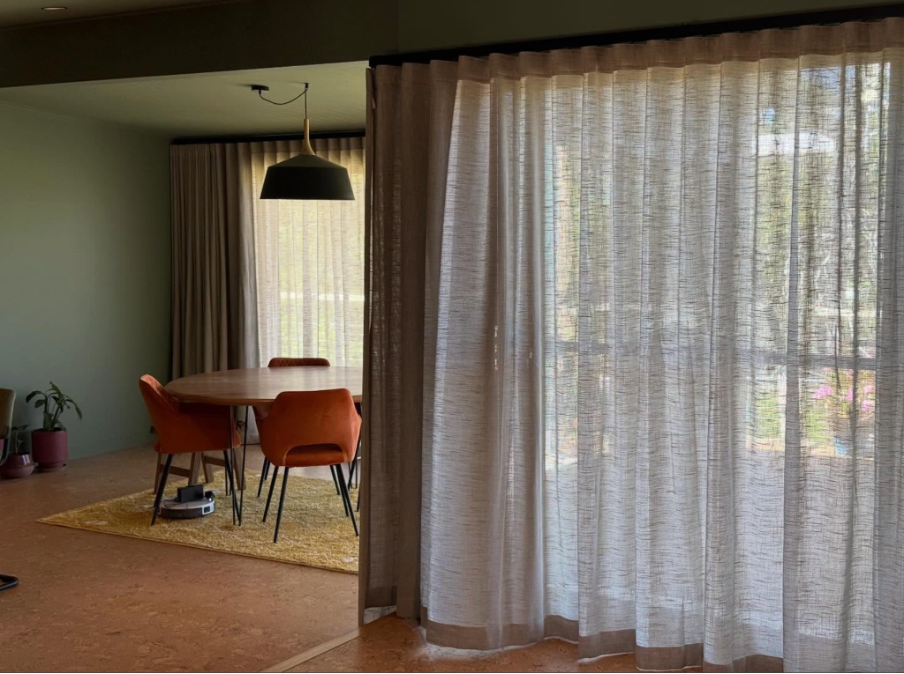
Sliding doors are a defining feature of many Australian homes. They bring natural light into living spaces, connect the indoors with decks and gardens, and make the most of the relaxed indoor outdoor lifestyle we enjoy on the Mornington Peninsula.
But a sliding door is not simply a large piece of glass that needs covering. It is also an access point, it may open onto an entertaining area or pool, and it may take harsh western afternoon sun. There is no single best solution for every sliding door. It depends on how the door is used, how much sun it receives, the privacy you need and what you want the furnishing to achieve.
What to Consider Before Choosing Blinds for a Sliding Door
How Often Is the Door Used?
A door opened several times a day needs a very different solution to one that is rarely used. A furnishing that looks beautiful but frustrates everyone trying to get outside is not the right choice.
Which Way Does the Door Face?
Orientation makes a significant difference to comfort. Large areas of east and west facing glass are particularly challenging because of low angle morning and afternoon sun. YourHome, Australia's guide to environmentally sustainable housing, recommends considering the orientation of glazing when planning shading. A west facing sliding door may need more than an internal blind to manage afternoon heat.
What Matters Most: Privacy, Insulation, Light Control or Appearance?
You may want privacy at night, soft filtered light during the day, better insulation in winter, reduced heat gain in summer, or clear views when the furnishing is open. Knowing your priorities makes it much easier to narrow down the options.
Curtains and Sheers: Versatile for Large Openings
For many contemporary and architecturally designed homes, curtains are one of the best solutions for sliding doors. They work with the horizontal movement of the door and can be designed to stack neatly away from the usable opening.
Sheer curtains soften a room while still allowing natural light in, providing daytime privacy and reduced glare. Blockout curtains suit bedrooms and living areas where privacy matters, and when correctly fitted they also assist with thermal performance. Australian Government energy advice recommends close fitting window coverings as part of improving temperature control through glazed doors.
The most versatile option is often a layered system: a sheer for daytime softness and privacy, with a blockout curtain drawn in the evening for darkness and insulation.
Styling tip: always plan where the curtains will stack. The stack needs to sit clear of the main opening, and that belongs in the measure and design stage rather than after installation.
Roller Blinds: Clean, Contemporary and Highly Adaptable
Roller blinds remain one of the most popular window furnishings in Australian homes, and they can work very well on sliding doors when the door configuration is properly considered.
If the door is the main access point and opened constantly, a roller blind on its own can be inconvenient because it needs to be raised first. That does not rule them out. Roller blinds work well when:
- The door is only used occasionally
- The opening includes fixed glass panels alongside the sliding section
- The blind configuration is designed around how the doors operate
- They are combined with curtains or another window furnishing
Fabric choice is the biggest advantage. Sunscreen fabrics give daytime glare control while keeping the view, translucent fabrics balance privacy with soft natural light, and blockout fabrics suit bedrooms and night time privacy. Keep in mind that internal roller blinds manage sunlight after it has reached the glass, so where solar heat gain is the main problem, external shading is usually more effective.
Styling tip: layer a sunscreen roller blind with curtains. The blind manages daytime glare and privacy, while the curtains add softness, night time privacy and extra insulation.
Panel Glide Blinds and Vertical Blinds: Built for Horizontal Openings
Panel glide blinds and vertical blinds are worth considering because they move the same way the door does.
Panel glide blinds use wide fabric panels that slide along a track and stack back against each other. They suit large sliding and stacking doors, can be made in sunscreen, translucent or blockout fabrics, and their clean lines work well in contemporary homes. The main consideration is the stack: the panels need somewhere to sit when open, ideally clear of the glass.
Vertical blinds use individual vanes that rotate and draw to one or both sides. They let you adjust light and privacy without fully opening the covering and handle wide openings comfortably, which makes them practical where function and budget lead.
Plantation Shutters: A Durable, Architectural Option
Plantation shutters can work on sliding doors provided the configuration suits the opening. They offer adjustable privacy, flexible light control and a durable, timeless finish, and they work particularly well on smaller openings, in bedrooms and on secondary access doors.
They are not always the best solution for a very large, heavily used door. The panels need somewhere to stack when open, which can affect access and views, so a good consultation should cover which section is used for access and where the panels will sit.
Honeycomb Blinds: The Strongest Choice for Insulation
Honeycomb blinds, also known as cellular blinds, trap pockets of air between the glass and the room. That makes them a strong option where thermal comfort around large areas of glass is the priority, and they offer a compact appearance with light filtering or blockout fabrics.
Not every honeycomb system is designed for every sliding door. The operating system needs to suit the size and movement of the door, which is where professional advice is particularly important.
External Blinds and Awnings: When Heat Is the Bigger Problem
For large sliding doors exposed to significant sunlight, particularly on western and eastern elevations, external shading should be part of the conversation. Internal furnishings manage light, privacy and comfort. External shading stops solar heat before it reaches the glass. Sustainability Victoria explains that external shading is particularly effective for reducing heat gain because it prevents solar radiation from reaching the glazing.
External options include external blinds, track guided systems, retractable and fixed awnings, shutters, louvre systems and pergolas. Often the best result uses both: external shading for solar protection, internal curtains for privacy and insulation.
Motorised Blinds and Curtain Tracks
Motorisation makes a real difference on large sliding doors. Wide curtains and blinds are heavy to operate manually, and when operation is effortless, homeowners are far more likely to use their furnishings as intended.
Motorised curtain tracks suit wide expanses of glass, heavy full length curtains and double systems with sheers and blockouts. Motorised blinds suit wide roller blinds, multiple blinds in one room and hard to reach windows, and can be run by remote, wall switch or home automation.
At
Shades of Australia, we recommend Somfy and Acmeda for reliable automation, and Silent Gliss where a premium motorised curtain track is required. If you are building or renovating, discuss motorisation early so power, track placement and switch locations can be planned in advance. For existing homes, battery powered and retrofit options are often available.
How Much Do Blinds for Sliding Doors Cost?

There is no standard price, because quality window furnishings are made to suit the specific opening.
The main factors are:
- The size of the door, since larger openings need more material and more substantial operating systems.
- The product selected, as curtains, roller blinds, panel glides, shutters, honeycomb blinds and external systems all sit at different price points.
- Fabric or material choice.
- The operating system, with manual operation generally costing less than motorisation.
- Installation requirements, particularly for large or complex window furnishings.
Rather than asking what the cheapest option is, consider value over time. How often will the door be used? Will the system become frustrating to operate? A lower upfront price is not better value if the product does not suit the way the space is used.
Styling Tips for Sliding Door Window Furnishings

- Consider the entire wall, not just the door: Sliding doors are often flanked by fixed windows, so design the wall as one feature.
- Think about the view: A garden, pool or coastal outlook should stay unobstructed when the furnishing is open, which comes down to stacking position.
- Do not ignore orientation: A beautiful furnishing will not solve a heat problem on a large west facing door.
- Match function with lifestyle: A family using the door twenty times a day has different needs to a formal dining room.
- Layer where it helps: External blinds with internal curtains, or sheers with blockouts.
The Bottom Line
Start with how you use the door. Sometimes the answer is a sheer and blockout curtain combination. Sometimes roller blinds are the cleanest and most practical solution. Panel glides or verticals may suit a wide opening used constantly, plantation shutters can be perfect for the right configuration, and honeycomb blinds are hard to beat where thermal performance is the priority. And sometimes the real issue is not the internal furnishing at all. It is the solar heat reaching the glass, and external shading should be considered first.
At Shades of Australia Mornington, we look at the bigger picture, from privacy and insulation through to sun exposure, access and style. Visit our Mornington showroom or book a consultation to explore the options best suited to your sliding doors.